What the work looks like when it lands.
Four engagements, described by what changed rather than by what was delivered. Some clients are named with permission; others are described by sector.
A transversal skills framework, built by the researchers who needed it.
- 39
- researchers involved
- 9
- sub-groups
- 11
- transversal skills identified
The situation
AUF’s national office in Algiers needed a framework of transversal skills to support the integration of academic researchers into the wider university ecosystem. A framework written by consultants and handed down would have been read once and filed. It had to come from the researchers themselves to carry any authority.
What we did
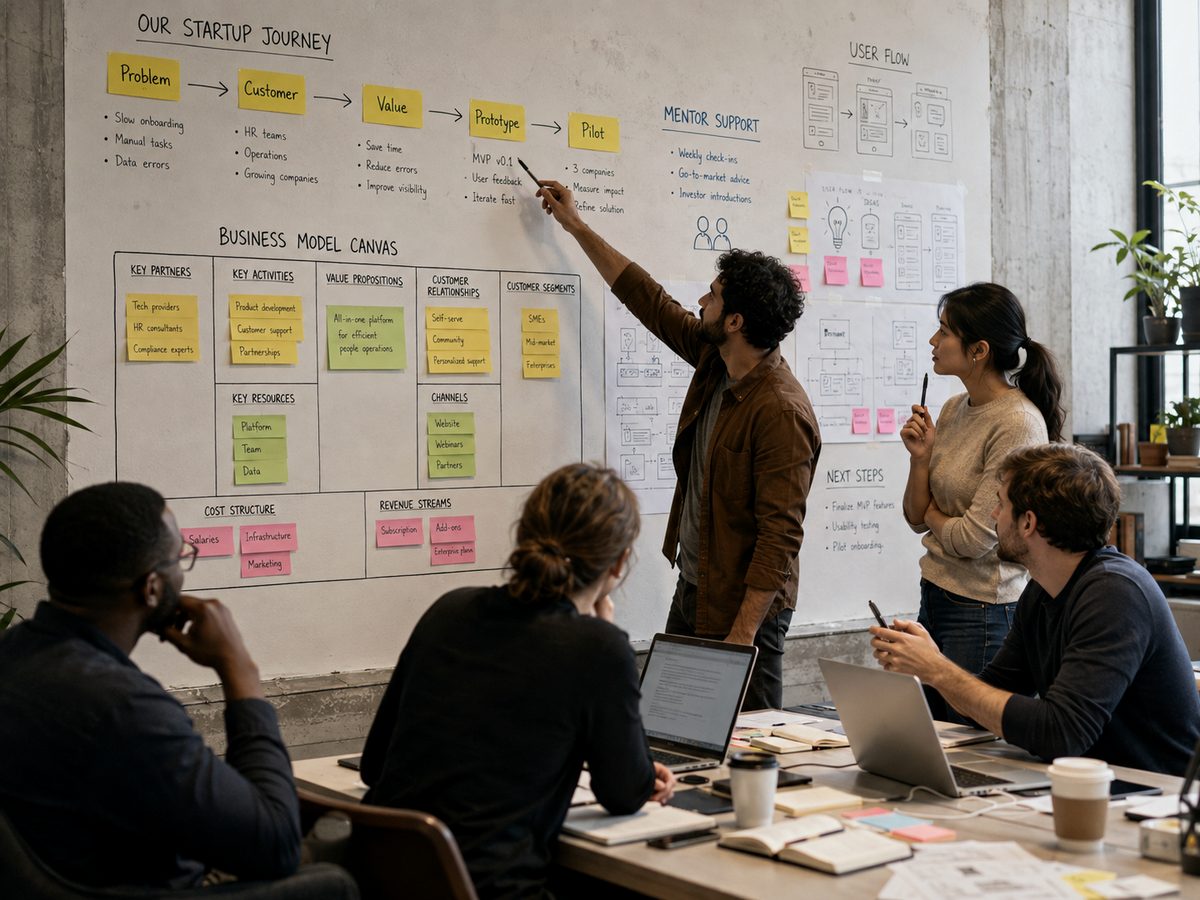
We facilitated a series of reflective workshops with 39 participants selected for diversity of discipline, region, gender and role — heads of research laboratories, researchers, academic staff and doctoral researchers. Three groups, one run first as a two-day pilot and the others over three days, working in nine sub-groups. Each group mapped its own challenges and enablers, sorted them into what they could control, influence or only be concerned by, identified the skills the work actually demanded, and mapped the ecosystem actors around them. Learning games were used to build the collaborative, non-judgemental conditions the exercise required.
What came out of it
A ranked framework of transversal skills, derived from the frequency with which each was cited across the nine sub-groups rather than asserted by us: oral communication and management and organisation first, then written communication, digital literacy, innovation and creativity, professional autonomy, collaboration, responsible conduct, leadership, interpersonal skills, and motivation and conflict management. Each skill came with concrete examples of how it shows up in practice, alongside a map of ecosystem actors and what each expects of researchers.
A full online MBA, specified, benchmarked and handed over.

- 120
- ECTS specified
- 2
- programmes benchmarked
- 15
- week semester structure
The situation
A two-year, 120 ECTS online MBA needed to exist as a properly specified programme rather than a set of intentions: documented, internally consistent, and defensible against external benchmarks — while remaining something the institution’s own academics could continue to build on.
What we did
We produced the programme specification and the module specifications across the suite, from strategy, marketing and international business to data and technologies, service management, business acumen and the two dissertation stages. We wrote the guidance for module creators, anchored in the ECTS framework and the institution’s qualifications framework, so that future modules would be written to the same standard by people we had never met. We built the blended learning template for the virtual learning environment, contributed to the quality policy, and mapped the programme against the QAA Subject Benchmark Statement for business and management and the European Higher Education Area framework. A parallel mapping exercise was carried out for an Executive MBA delivered in partnership with a UK university.
What came out of it
A programme that can be presented to an external reviewer with its specifications, its learning outcomes, its credit structure and its benchmark alignment in one coherent set — and an internal guidance document that lets the institution keep creating modules to standard without us.
A teaching team that left with priorities, not notes.
- 1
- day
- 2
- learning game rounds
- 100%
- of actions owned by participants
The situation
A teaching team delivering foundation programmes wanted to improve the student learning experience. The usual answer is a session on best practice, which everyone enjoys and nobody acts on.
What we did
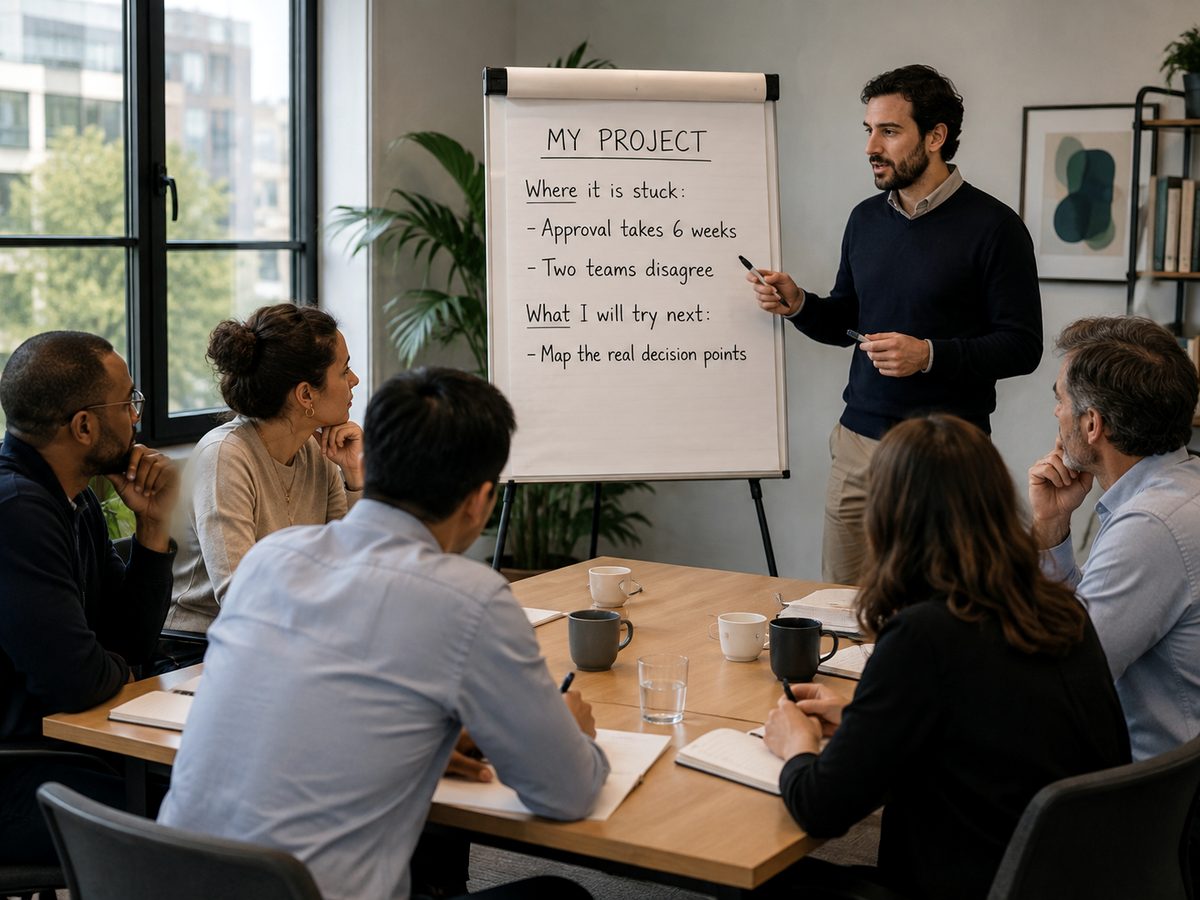
We ran a one-day workshop built the other way round. The team began by mapping its own current practice — what already works, and what gets in the way — then met the quality assurance principles of the student learning experience against that map rather than in the abstract. Two rounds of a learning game put communication and cooperation in student-centred learning under real pressure, so that the group experienced its own dynamics before discussing them. The day closed on a strategy session.
What came out of it
A prioritised set of actionable improvements owned by the people who will carry them, and a shared vocabulary for the quality conversation that continues after the workshop.
Two days that produced rituals, not resolutions.

- 2
- days
- 3
- zones of action
- 2
- learning games
The situation
A leadership team needed to align on how it delivers a quality learning experience — strengthen the culture, sharpen individual impact and build teams that perform under pressure. The team knew its problems. It had never sorted them by what it could actually do something about.
What we did
Two days, real-time and project-based. Day one mapped the practices, tools and behaviours that already support quality, alongside the challenges that undermine it, then sorted every challenge into three zones: what the team can act on with the resources it has, what it must advocate for, and what is genuinely outside its control. A learning game on communication and team building ran alongside. Day two reviewed the action plans against reflection, ran a second game on flow, and converted the remaining priorities into working processes and team rituals.
What came out of it
Action plans limited to the zone the team can actually act in, and a set of rituals rather than good intentions — the difference between a workshop the team enjoyed and a change in how it works on Monday.
Also on the record
Work that does not fit a case study.
Shorter engagements, assessment roles and institutional contributions that still say something about where we operate.
- AssessmentPanel member for first-year team entrepreneur pitches on a UK university Team Academy programme, across both the pitch and the report-back stages.
- Venture supportMentoring of student and early-stage founder teams, including digital health ventures, from proposition through to pitch.
- QualityContribution to institutional quality policy, module creation guidance and virtual learning environment templates for online delivery.
- Programme reviewIndependent mapping of postgraduate business programmes against subject benchmark statements and the European Higher Education Area framework.
Start with the problem, not the programme.
Tell us what you are trying to change, develop or improve. We will help you identify the capability, the programme or the intervention that fits the problem — and say so plainly if what you need is not a programme at all.